🗺 Open the interactive Pico map
Pico is the island of the mountain. Mount Pico, at 2,351 m the highest point in Portugal, rises straight out of the sea and is visible from half the archipelago. Around its base, black lava-stone walls enclose UNESCO-listed vineyards, old whaling villages have become the best places in the Azores to see sperm whales, and you swim in pools carved by the lava. This guide covers the whole island: the regions, the best things to do, how many days you need, getting there and around, where to stay and when to go.
- Size
- 445 km², about 46 km long and 16 km wide
- Main towns
- Madalena, São Roque do Pico, Lajes do Pico
- Getting there
- Pico airport (PIX), or the 30-minute ferry from Faial
- Time needed
- 3–4 days, including one for the mountain
- Best time
- May to September
- Getting around
- Hire a car; buses are few
- Highest point
- Mount Pico, 2,351 m
- Nickname
- The Grey Island
Start here
The must-see places on Pico
Build your first days around these. Tap any photo to see the place on the interactive map, with directions from where you are.






Island layout
Pico region by region
The mountain fills the west of the island, and a long volcanic ridge runs east from it. A road circles the coast, and a high road crosses the middle past the lakes. Madalena, where the ferry from Faial arrives, is the usual base. Driving times below are from Madalena.
Madalena and the vineyards
📍 The ferry port · base for most visitors
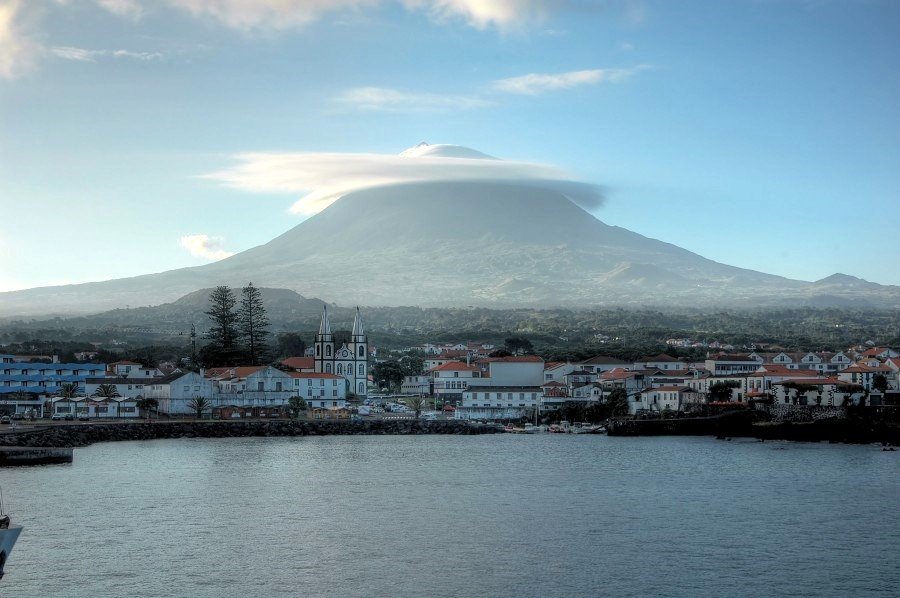
Madalena faces Horta across a narrow channel. Around it, thousands of small fields called currais, walled with black lava stone, protect the vines from the wind: the UNESCO-listed vineyard landscape. Walk through it at Criação Velha, visit the Pico Wine Museum in an old convent and taste the local verdelho. On the west coast, the Cachorro lava arches are carved by the waves.

Mount Pico and the high plateau
🚗 30 minutes to the mountain house
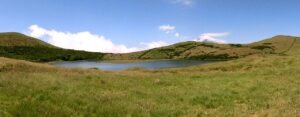
The climb up Mount Pico starts at the Casa da Montanha at about 1,200 m and takes most of a day. Even if you don’t climb, drive the high road across the island: crater lakes such as Lagoa do Capitão, Lagoa do Caiado and Lagoa do Peixinho mirror the mountain on clear days.
São Roque and the north coast
🚗 25 minutes
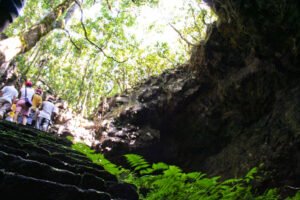
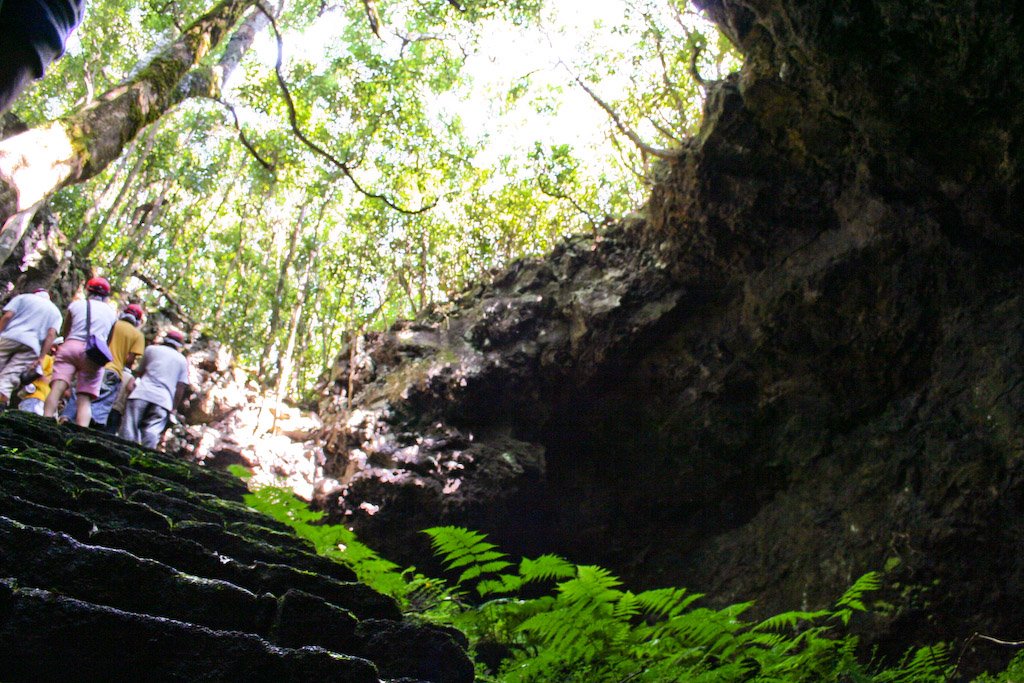
The green, cooler side of the island. Walk underground through Gruta das Torres, the longest lava tube in Portugal, on a guided visit. The old whale factory in São Roque is now the Whaling Industry Museum, and the vineyards of Santa Luzia are part of the UNESCO site.

Lajes do Pico and the south coast
🚗 40 minutes
Lajes was the whaling capital of the Azores, and today it is the base for whale watching. The Whalers Museum tells the story in the old boathouses, and the same lookouts that once spotted whales for the hunters now guide the watching boats. The south coast has some of the sunniest weather on the island.

The wild east
🚗 1 hour
The quiet end of the island, with small villages, forest and cliffs. Drive out to the Ponta da Ilha Lighthouse at the eastern tip, stop at the natural pools along the way and look back at the mountain from the Ponta do Arrife coast.
The highlights
Best things to do on Pico
⛰ Climb Mount Pico
A tough 6–8 hour return hike to the top of Portugal, with views over five islands on a clear day.
🐋 See sperm whales
Pico is one of the best places in the world to see them, from boats out of Lajes and Madalena.
🍇 Taste Pico wine
Walk the lava-walled vineyards, then taste verdelho and other local wines at a winery.
🕳 Walk through a lava tube
Gruta das Torres runs for kilometres under the ground; visits are guided and limited in size.
🏊 Swim in lava pools
Every village has its natural pool cut into the black rock. All Azores beaches →
🏞 Drive the lakes road
The high road across the island passes crater lakes with the mountain behind them.
⚓ Learn the whaling story
Two good museums, in Lajes and São Roque, tell how the islanders hunted whales from open boats until 1987.
🥾 Hike below the summit
Coastal paths through vineyards and old trails between villages.
🗺 Comparing islands? See the best things to do on every Azores island.
🐋 Want to see whales? Compare the islands in our Azores whale watching guide.
🏞 Love the views? See the best crater lakes in the Azores, island by island.
Planning
How many days do you need on Pico?
Plan three to four days, with one of them kept free for the mountain. The summit is often in cloud, so a flexible plan gives you the best chance of a clear climb.
| Trip length | What you can see |
|---|---|
| Day trip from Faial | The vineyards, Madalena and the lakes road, or a whale-watching trip. |
| 2 days | The vineyards and west coast, plus whales or Gruta das Torres. No climb. |
| 3–4 days | Everything above, plus the summit climb and the east of the island. |
A 3-day plan
- Madalena and the vineyards: Criação Velha, the wine museum, Cachorro and a tasting.
- Mount Pico: an early start for the climb, or the lakes road and Gruta das Torres if it’s cloudy.
- Lajes do Pico: a morning whale-watching trip, the Whalers Museum and the east coast.
Combining islands? Pico pairs perfectly with Faial (30 minutes by ferry) and São Jorge; see which Azores island to visit.
Arrival
Getting to Pico
- By ferry from Faial: the easiest way in. Boats cross between Horta and Madalena several times a day in about 30 minutes, all year.
- By ferry from São Jorge: ferries link Pico with Velas on São Jorge all year, more often in summer.
- By air: Pico airport (PIX) on the north coast has flights from Lisbon and inter-island flights, mostly via Ponta Delgada or Terceira. Faial’s airport, across the channel, has more connections.
Many visitors fly into Faial and take the ferry over: compare both when you book.
✈️ Flying in from abroad? See how to get to the Azores: flights from Europe and North America, and which airport to choose.
On the island
Getting around Pico
You need a car on Pico. The island is big, buses are rare and taxis are expensive over its distances. Book early in summer, when cars run out.
| From Madalena to | By car |
|---|---|
| Mount Pico (Casa da Montanha) | about 30 min |
| São Roque do Pico | about 25 min |
| Lajes do Pico | about 40 min |
| Ponta da Ilha | about 1 hour |
Without a car, stay in Madalena and book tours that include transport, such as whale watching and guided climbs.
Your base
Where to stay on Pico
Madalena is the most practical base, with the ferry, the most restaurants and the shortest drive to the mountain.
| Area | Best for | Keep in mind |
|---|---|---|
| Madalena | The ferry to Faial, restaurants, the vineyards | The busiest town on the island |
| Lajes do Pico | Whale watching, a sunny coast | Far from the ferry and the vineyards |
| São Roque do Pico | The green north coast, Gruta das Torres | Cloudier; fewer places to eat |
| Vineyard houses | Stone cottages among the vines, sunsets over Faial | Quiet; you will need a car |
🛏 Visiting more than one island? See where to stay on every Azores island.
Weather
When to visit Pico
The coast is mild all year, but the mountain has its own weather: it can be near freezing at the summit when it is 25 °C in Madalena.
| Season | Typical daytime (coast) | What to expect |
|---|---|---|
| Summer (June–September) | 23–26 °C | The best months for the climb and swimming; the grape harvest starts in late summer. |
| Spring (April–May) | 18–21 °C | The peak season for whale watching, with migrating blue and fin whales. |
| Autumn (October–November) | 19–22 °C | Warm sea in October, quieter roads, more cloud on the mountain. |
| Winter (December–March) | 15–17 °C | Wet and windy; with snow or ice on the summit, the climb may be closed or need a certified guide and winter gear. |
🌦 More detail: Azores weather month by month, with sea temperatures and how the weather differs between the islands, and the best time to visit the Azores by month and interest.
Know before you go
Tips for visiting Pico
- Register before you climb. Every climber signs in at the Casa da Montanha and carries a tracking device; numbers are limited, so book ahead in summer.
- Start the climb early, bring warm layers, gloves and plenty of water, and turn back if the cloud closes in.
- Keep a spare day for the mountain in case the summit is in cloud on your planned day.
- Book Gruta das Torres in advance: visits are guided and groups are small.
- Book a car early, especially in July and August.
- Check the ferry times if you are day-tripping from Faial; the last boat back can be early.
Use our interactive Pico map to find viewpoints, lakes, pools and trailheads near you, with one-tap directions.
Questions
Pico FAQ
Is Pico worth visiting?
Yes. It has the highest mountain in Portugal, some of the best whale watching in the world, a unique UNESCO wine landscape and natural lava pools. It is the island to choose if you like hiking and wildlife.
How many days do you need on Pico?
Three to four days, with one day kept free for climbing Mount Pico. A day trip from Faial is enough to see the vineyards and Madalena.
How hard is it to climb Mount Pico?
It is a demanding hike of about 6–8 hours return on steep, loose volcanic rock, marked by numbered posts rather than a trodden path, with fast-changing weather. Fit hikers can do it alone after registering; otherwise go with a certified guide.
Do you need a car on Pico?
Yes, in practice. Buses are rare and distances are long. Without a car, stay in Madalena and use tours.
How do you get from Faial to Pico?
By ferry from Horta to Madalena, about 30 minutes, with several crossings a day all year.
When is the best time for whale watching on Pico?
Sperm whales can be seen all year. April and May add migrating blue, fin and sei whales, and summer has the calmest seas.
Can you swim on Pico?
Yes, in the natural pools found in most coastal villages, from June to October when the sea is warmest. There are very few sandy beaches.