The Azores are nine volcanic islands in the middle of the North Atlantic, a region of Portugal about two hours’ flight from Lisbon and five from Boston. They are crater lakes and hot springs, whales and dolphins, black lava coasts and hydrangea-lined roads, with a mild climate all year and far fewer crowds than mainland Europe. This guide gives you the whole archipelago in one place: the islands, the best experiences, when to go, how to get there and between the islands, and the practical things to know before you go.
- Where
- Mid-Atlantic, 1,450 km west of Lisbon
- Islands
- 9, in three groups, spread over 600 km
- Country
- Portugal (autonomous region), in the EU
- Population
- About 236,000
- Currency
- Euro (€)
- Language
- Portuguese; English widely spoken
- Time zone
- UTC−1, one hour behind Lisbon
- Climate
- Mild all year: about 16 °C in winter, 25 °C in summer
The archipelago
The 9 Azores islands
The islands form three groups. Each one is different enough to feel like its own small country, and each has its own full guide and interactive map. Not sure where to start? Our which island to visit picker matches the islands to your trip.
The eastern group The biggest island and the sunniest one, closest to Europe.
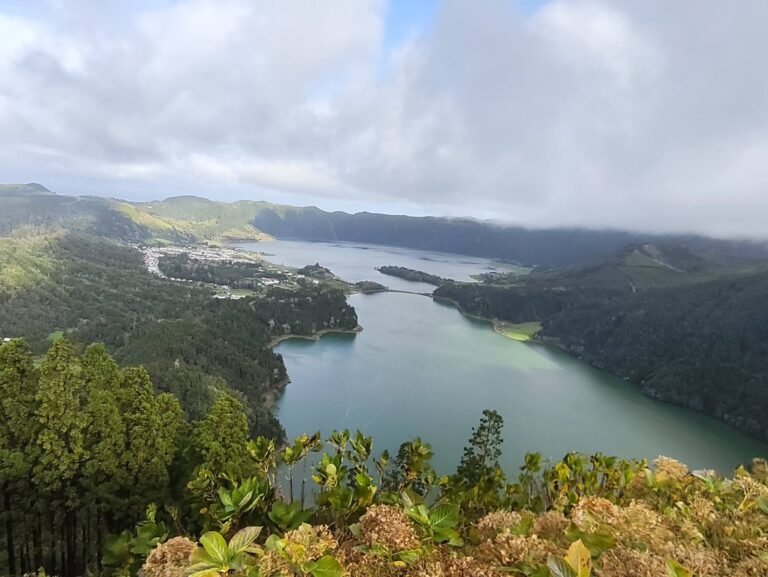
São Miguel
The Green Island
Crater lakes, hot springs, tea plantations and the archipelago’s liveliest town.
Guide →🗺 Map
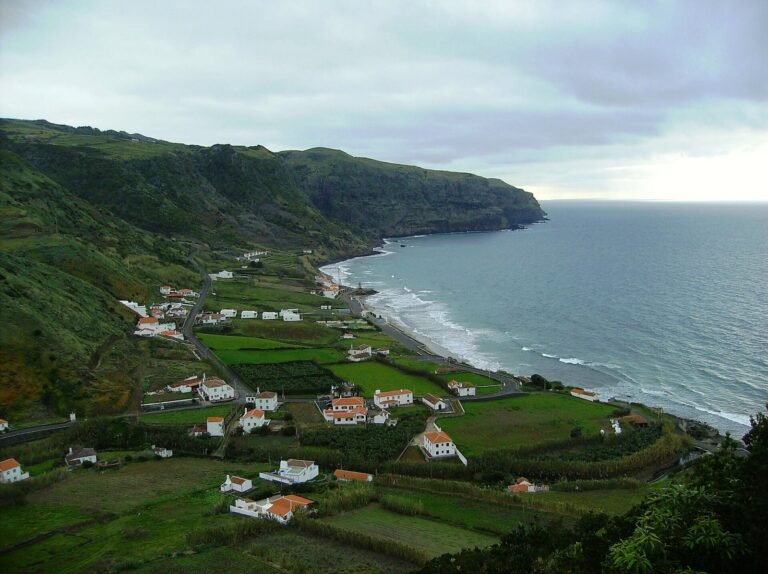
Santa Maria
The Yellow Island
The sunniest island: white-sand bays, vineyards on terraces and a red clay desert.
Guide →🗺 Map
The central group Five islands close together, linked by ferries: the heart of island hopping.
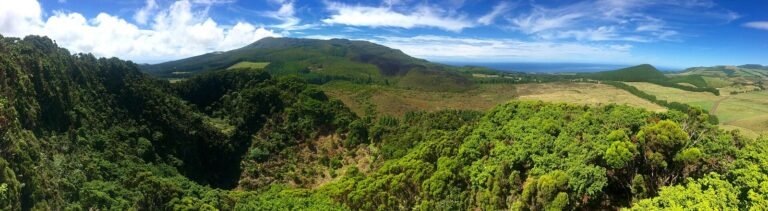
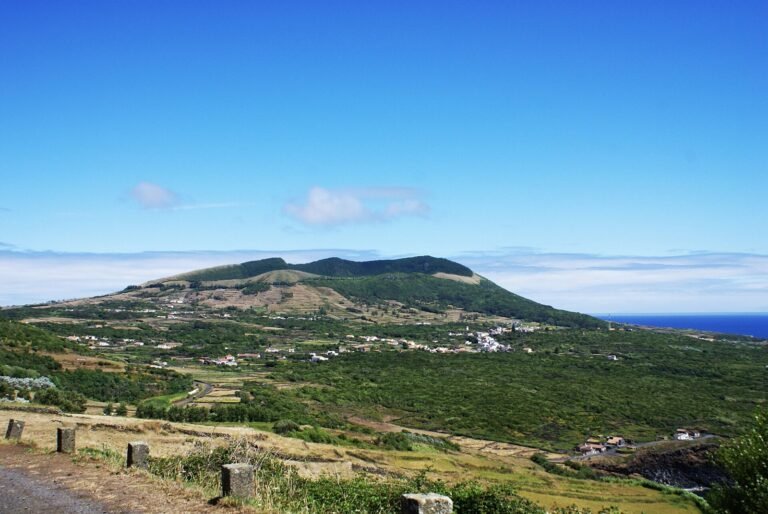
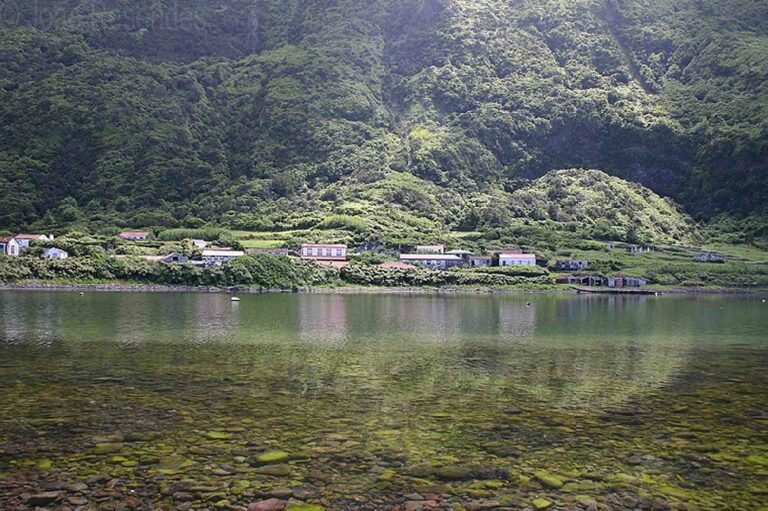
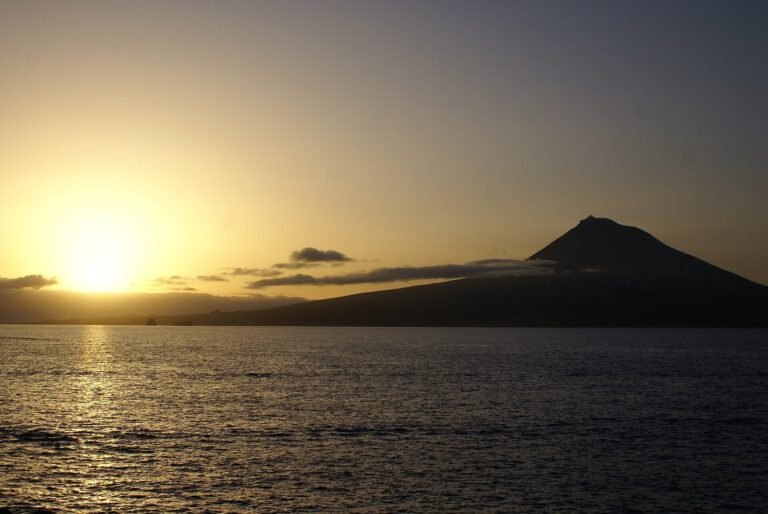
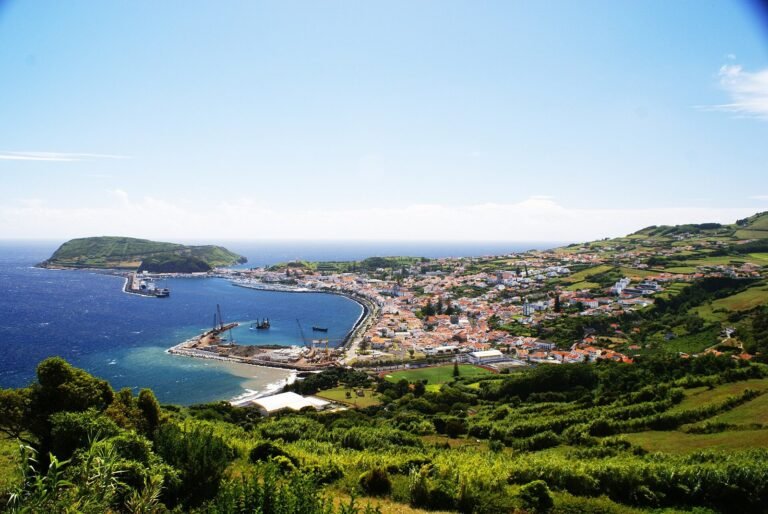
The western group Two wild islands on the North American plate, the edge of Europe.
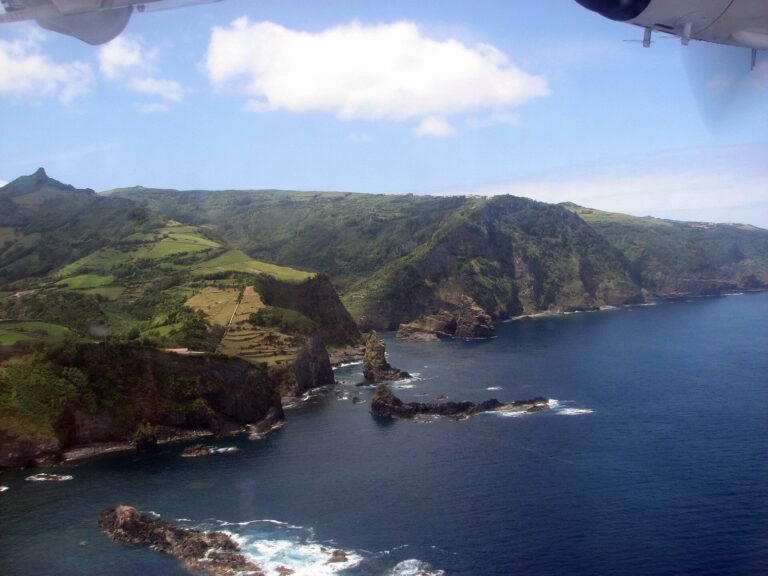

In short
Why visit the Azores?
- Volcanic landscapes up close. Walk crater rims, swim in lakes inside volcanoes, go down into a volcanic chimney and climb Portugal’s highest mountain.
- Some of the best whale watching in the world. Over twenty species of whales and dolphins pass the islands, and sperm whales live here all year.
- Nature without the crowds. Even in August, a short walk takes you away from other visitors, and protected areas cover much of the land and sea.
- A mild climate all year. Rarely hot, never cold: the Gulf Stream keeps temperatures between about 14 °C and 27 °C.
- Close to both Europe and North America. Direct flights from Lisbon take about two hours, and from the US east coast about five.
- Real island life. Village festivals, fishing harbours, cows on the road and food cooked by the volcano.
Highlights
The best experiences in the Azores
🏞 Crater lakes
Sete Cidades and Lagoa do Fogo on São Miguel, and the seven lakes of Flores.
♨️ Hot springs
Iron-rich pools in Furnas, a hot spring in the ocean at Ferraria and the spa at Carapacho on Graciosa.
🐋 Whales and dolphins
All year from Pico, Faial, São Miguel and Terceira; blue and fin whales pass in spring.
⛰ Mount Pico
Climb to 2,351 m, the top of Portugal, for sunrise above the clouds.
🌋 Volcanoes and caves
Walk into Algar do Carvão on Terceira, across the Capelinhos ash on Faial and through lava tubes on Pico.
💦 Waterfalls
Flores has more than any other island; São Miguel’s Nordeste comes second.
🥾 Hiking
Coastal trails to the fajãs of São Jorge, crater rims and the cliff path on Flores.
🍲 Food and wine
Cozido cooked in the ground, Terceira’s alcatra, São Jorge cheese, local tea, pineapples and Pico wine.
Every island’s viewpoints, lakes, pools, beaches and waterfalls are on our free Azores map, with directions from wherever you are.
Weather and seasons
When to visit the Azores
May to September is the best time for most trips: the warmest sea, the most reliable flights and ferries, and long days for hiking. June and September are the sweet spot, with good weather and fewer people than July and August. The weather changes quickly on every island (locals talk of four seasons in a day), so plan flexible days whatever the month.
| Season | Typical daytime | Good for | Keep in mind |
|---|---|---|---|
| Summer (June–September) | 23–27 °C | Swimming, hiking, Mount Pico, festivals, hydrangeas | The busiest and most expensive time |
| Spring (April–May) | 18–21 °C | Green landscapes, blue and fin whales, quiet trails | Showers; sea still cool |
| Autumn (October–November) | 19–23 °C | Warm sea in October, birdwatching on the western islands | More rain and wind as November nears |
| Winter (December–March) | 14–18 °C | Hot springs, low prices, empty viewpoints | Rain, wind and some flight disruption |
Arrival
How to get to the Azores
Almost everyone flies. The main gateway is Ponta Delgada on São Miguel (PDL), followed by Terceira (TER); Horta on Faial, Pico and Santa Maria also have some flights from Lisbon.
- From mainland Portugal: several direct flights a day from Lisbon and Porto, about 2 hours 15 minutes.
- From the rest of Europe: direct flights from a number of cities, many of them seasonal; otherwise change in Lisbon or Porto.
- From North America: direct flights from the US east coast and Canada to Ponta Delgada and Terceira take about 4.5 to 5 hours.
- By sea: cruise ships call at Ponta Delgada, and Horta is a classic stop for yachts crossing the Atlantic. There is no passenger ferry from the mainland.
Between the islands
Island hopping in the Azores
- Flights link all nine islands, mostly via Ponta Delgada and Terceira. Hops take 30 to 60 minutes but can be delayed by wind and fog, especially to Flores and Corvo.
- Ferries are practical in the central group: Faial to Pico takes about 30 minutes all year, and boats also link Pico and Faial with São Jorge. In summer, boats cross between Flores and Corvo.
- São Miguel and Terceira are not part of the regular ferry network, so combining them with other islands means flying.
Golden rule: stay at least two nights on each island, and don’t schedule your flight home the same day as an inter-island hop.
Planning
How many days do you need in the Azores?
| Trip length | Islands | Typical plan |
|---|---|---|
| 4–5 days | 1 | São Miguel, with no time lost travelling between islands |
| 1 week | 2 | São Miguel plus Terceira, or plus Pico |
| 10 days | 3 | São Miguel plus the Faial–Pico–São Jorge triangle by ferry |
| 2 weeks | 4–5 | São Miguel, Terceira, Pico and Faial, plus Flores (and Corvo) |
See every combination, with nights per island, on which Azores island to visit.
On each island
Getting around the islands
Hiring a car is the easiest way to explore every island except tiny Corvo. Roads are good and quiet, and many viewpoints, lakes and trailheads have no public transport. Book early for June to September, when cars and automatics run out, especially on the smaller islands.
- Buses link the main towns on most islands, but services are infrequent, especially at weekends.
- Taxis offer island tours at agreed prices and drop hikers at the start of one-way trails.
- Tours run from the main towns: crater lakes, whale watching, jeep trips and guided hikes.
Know before you go
Azores travel essentials
🛂 Entry
The Azores are part of Portugal, the EU and the Schengen area, so the same entry rules apply as for mainland Portugal. Visitors from the US, Canada and the UK do not need a visa for short stays; check the EU’s current entry requirements before you travel.
💶 Money
The euro. Cards are accepted almost everywhere, but carry some cash for small cafés, markets and rural taxis.
💬 Language
Portuguese. English is widely spoken in hotels, restaurants and tour companies, less so in small villages.
🔌 Power and phones
European two-pin plugs, 230 V. EU mobile plans roam at no extra cost, and coverage is good on the main roads.
🛡 Safety
The Azores are very safe, with little crime. The real risks are nature: sudden weather changes, strong sea currents, slippery trails and closed paths. The islands are volcanically active and closely monitored, so follow local advice.
💰 Costs
Generally cheaper than much of Western Europe for food and drink. Hotels and car hire rise sharply in July and August, so book early for summer.
Questions
Azores FAQ
What is so special about the Azores?
Volcanic landscapes of crater lakes, hot springs and lava coasts, some of the best whale watching in the world, a mild climate all year and very few crowds, all within a short flight of Europe and North America.
Which Azores island is best to visit?
São Miguel for a first visit: it has the most to see and the best flight connections. Pico and Faial suit hikers and whale watchers, Terceira history lovers, and Flores anyone after wild scenery. Our island picker helps you choose.
How many days in the Azores is enough?
Four to five days is enough for one island, a week for two, and ten days to two weeks for three to five islands. Allow at least two nights per island.
What is the best month to go to the Azores?
June and September offer warm, settled weather with fewer people than July and August. May is green and quiet, and good for whales.
Are the Azores expensive?
Not compared with most of Western Europe: eating out and local produce are good value. Accommodation and car hire are the big costs, and both rise in July and August.
Do US citizens need a visa for the Azores?
Not for short tourist stays: the Azores follow Portugal’s Schengen rules. Check the EU’s current entry requirements before you travel, as new registration systems are being introduced.
How do I get to the Azores from the US?
Direct flights from the US east coast reach Ponta Delgada (and in some seasons Terceira) in about 4.5 to 5 hours. Otherwise, connect through Lisbon or Porto.
Do you need a car in the Azores?
On most islands, yes, to reach viewpoints, lakes and trailheads. Without a car, base yourself in the main town and use tours, taxis and buses.
Are the Azores safe?
Yes, they are one of the safest places in Europe, with very little crime. Take care with the weather, sea currents and wet trails, and follow local advice on closed paths and volcanic activity.
Can you swim in the sea in the Azores?
Yes, from about June to October, when the sea is around 20–24 °C. Most swimming is in natural lava pools and black-sand beaches; Santa Maria has golden sand.