The crater lakes are the classic image of the Azores: blue and green water filling old volcanoes, ringed by steep green walls and often wrapped in cloud. São Miguel has the most famous ones, Flores has seven, and Corvo’s whole crater is a lake world of its own. This guide ranks the best crater lakes on every island, with how to see them, the walks and when to go for a clear view.
The short answer
- The must-sees: Sete Cidades and Lagoa do Fogo on São Miguel.
- The wildest: the Caldeirão on Corvo and the seven lakes of Flores.
- The most unusual: the underground lake of Furna do Enxofre on Graciosa.
- When: early in the morning, before the clouds build over the craters.
Ranked
The best crater lakes in the Azores
São Miguel
1. Sete Cidades
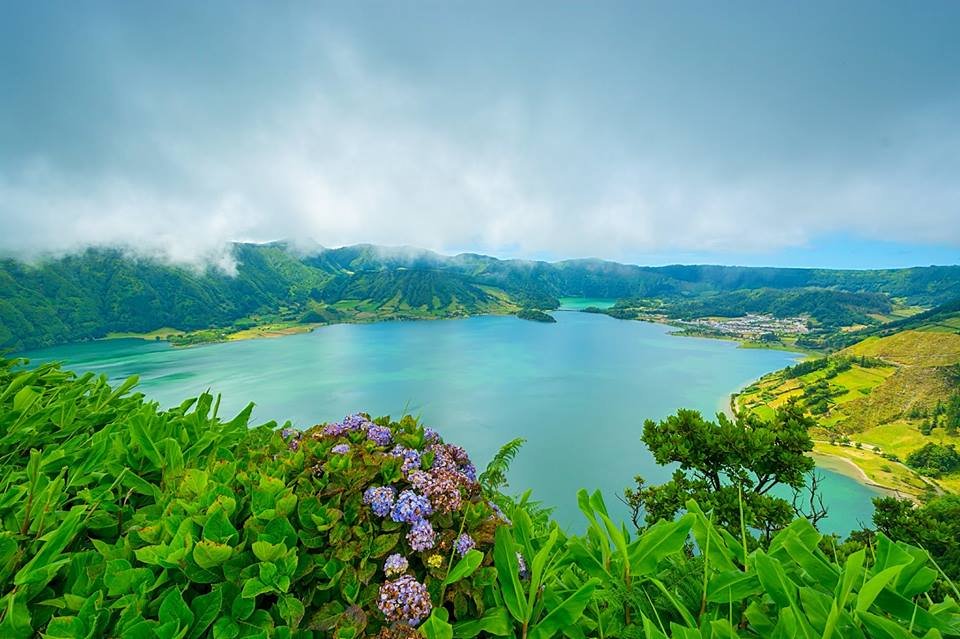
The most famous view in the Azores: a blue lake and a green lake side by side in a crater about 5 km wide, with a village on the shore. Look down from the Miradouro da Vista do Rei and the Miradouro da Grota do Inferno, then drive down to the bridge between the lakes. Legend says the tears of a blue-eyed princess and a green-eyed shepherd filled the two lakes. Smaller lakes nearby, such as Lagoa de Santiago and Lagoa do Canário, are worth a stop on the way.
São Miguel
2. Lagoa do Fogo
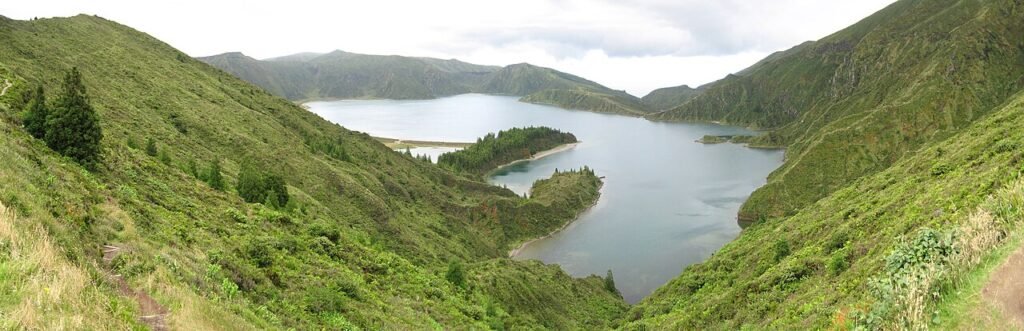
The wildest of the big lakes: no village and no road down, just a wide blue lake with pale sandy shores in a nature reserve high in the middle of São Miguel. A steep path drops from the main viewpoint to the water. From about mid-June to 30 September, hire cars may not drive the lake road during the day, and a shuttle bus runs instead.

Corvo
3. The Caldeirão, Corvo
The whole north of the smallest island is one collapsed crater, about 2 km across and 300 m deep, with lakes and tiny islets on its floor. The view from the rim is one of the most memorable in the archipelago, and a path leads down to the lakes. Most visitors see it on a day trip by boat from Flores.
Flores
4. Lagoa Funda and Lagoa Rasa, Flores
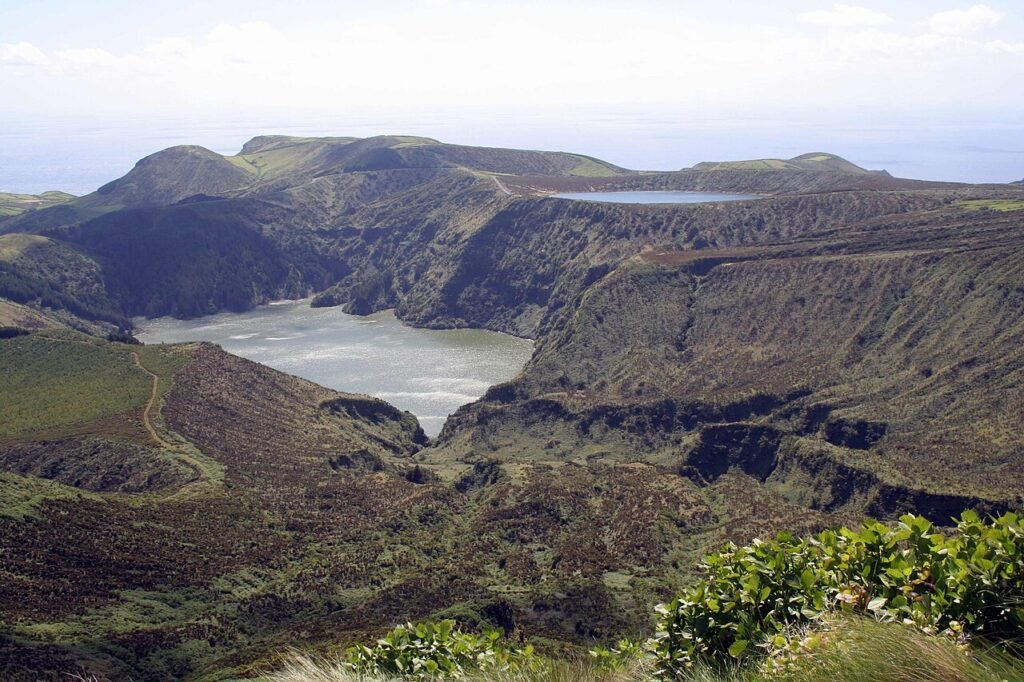
Two crater lakes side by side, one deep and dark, one shallow and bright, seen from a viewpoint on the road across the plateau. Flores has seven crater lakes in all, and these two are the classic view.
Flores
5. Lagoa Negra and Lagoa Comprida, Flores
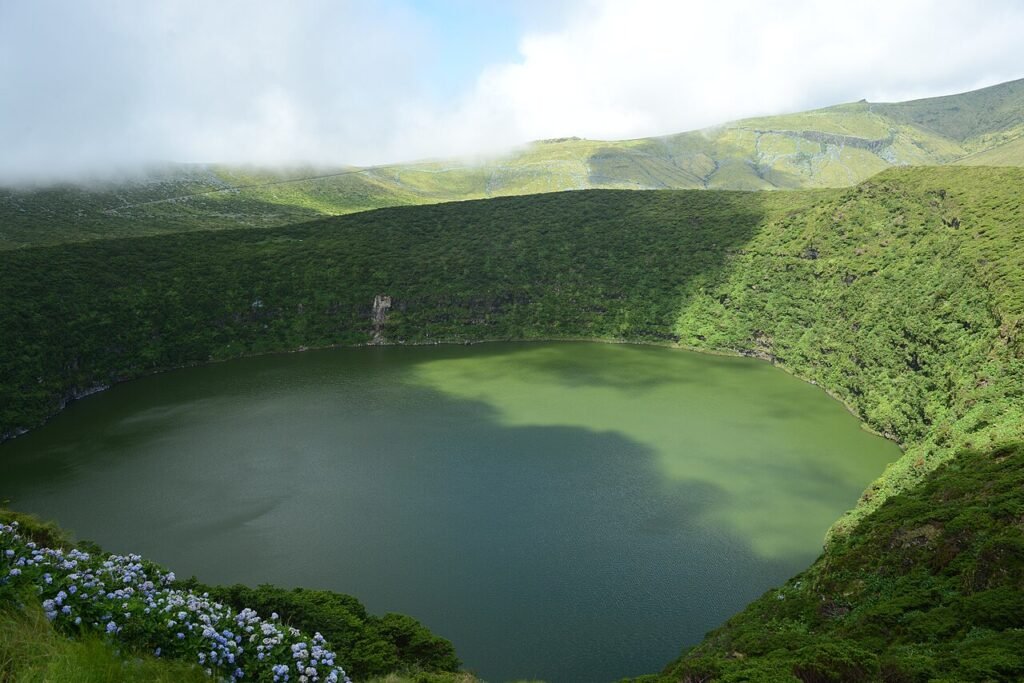
Further along the plateau, the deep, dark Lagoa Negra and the long Lagoa Comprida lie next to each other in the wild highlands. Mist comes and goes quickly up here, so wait a few minutes if the view is hidden.

São Miguel
6. Furnas Lake
A calm lake in the old crater of Furnas, with steaming fumaroles on the north shore, where the famous cozido is cooked in the hot ground. A path follows the shore between the fumaroles and a small chapel, and you can walk all the way around the lake.
São Miguel
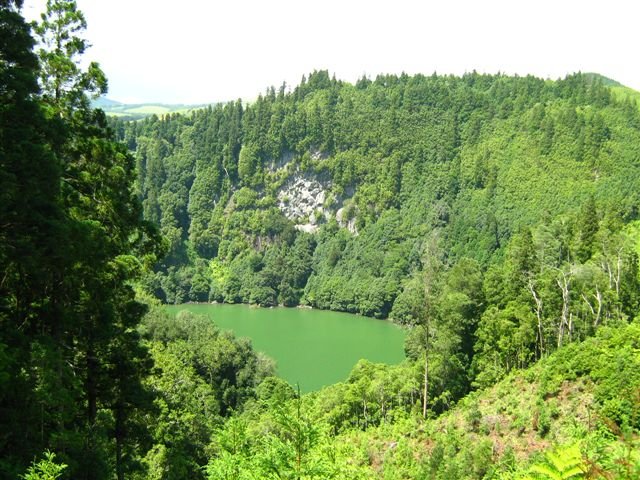
7. Lagoa do Congro
A hidden lake at the bottom of a small, forested crater east of Lagoa do Fogo. A short, steep path leads down through the trees to the green water. It feels far from everything, and it’s rarely busy.

Pico
8. Lagoa do Capitão and the Pico lakes road
The high road across Pico passes a string of small crater lakes, among them Lagoa do Capitão, Lagoa do Caiado and Lagoa do Peixinho. On a still, clear morning, Lagoa do Capitão mirrors Mount Pico behind it.

Faial
9. The Caldeira, Faial
Not a lake today but a huge green bowl: a crater about 2 km wide and 400 m deep, filled with forest. A short tunnel from the car park opens onto the view, and on a clear day you can walk the rim trail of about 7 km around it.
Graciosa
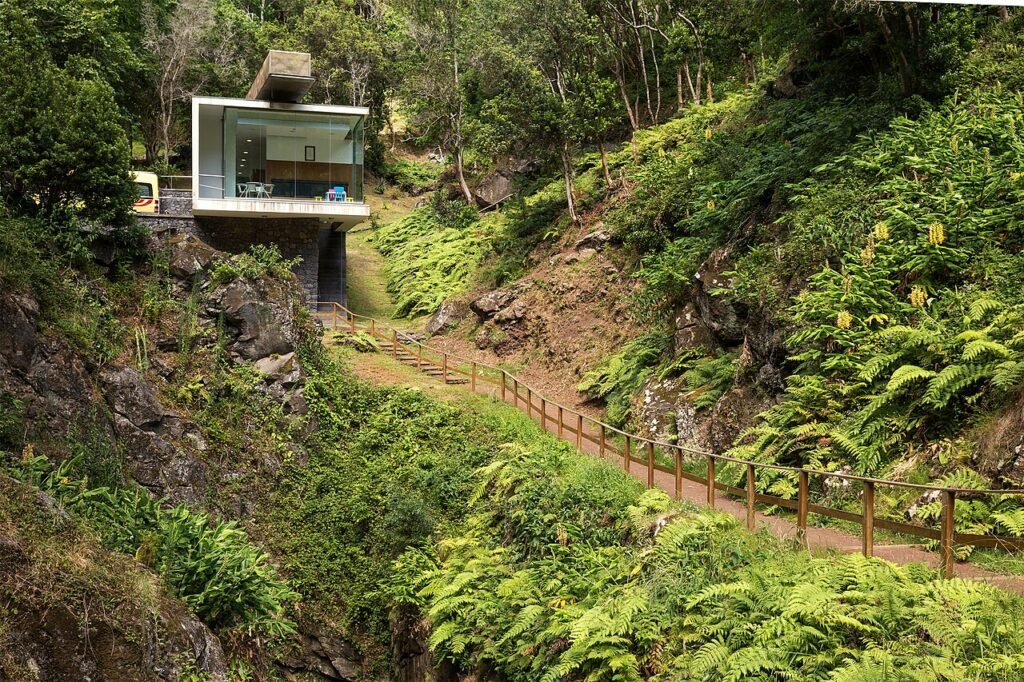
10. Furna do Enxofre, Graciosa
A crater lake underground. Inside the forested caldera of Graciosa, a stone tower with a spiral staircase of more than 180 steps leads down into a huge volcanic cave, with a lake and bubbling mud at the bottom. Check the opening hours before you go.
Terceira
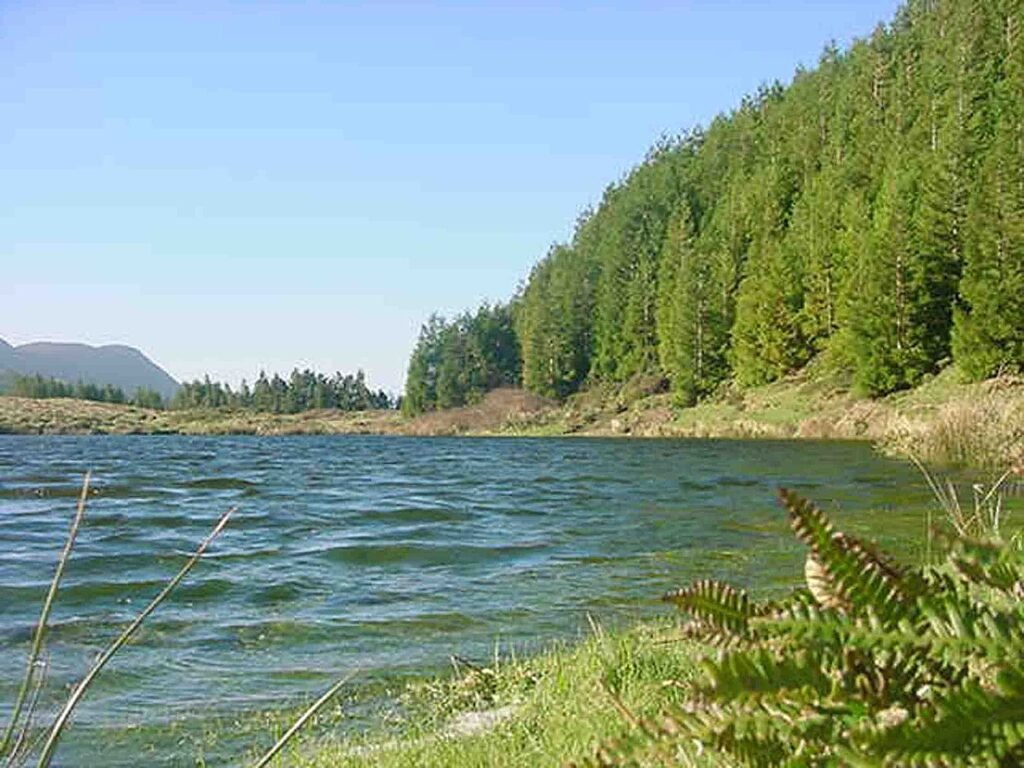
11. Lagoa do Negro and the craters of Terceira
In the green middle of Terceira, the small, dark Lagoa do Negro sits near the lava tube of Gruta do Natal, and the Caldeira de Guilherme Moniz nearby is one of the largest calderas in the Azores. Combine them with the caves and the fumaroles of Furnas do Enxofre.
Island by island
Crater lakes on each island
| Island | Crater lakes | Best way to see them |
|---|---|---|
| São Miguel | Sete Cidades, Lagoa do Fogo, Furnas, Congro, Santiago, Canário and more | Viewpoints by car; walks down to Fogo, Congro and around Sete Cidades |
| Flores | Seven lakes, including Funda, Rasa, Negra and Comprida | Viewpoints on the road across the plateau |
| Corvo | The lakes inside the Caldeirão | The rim viewpoint and the path down |
| Pico | Capitão, Caiado, Peixinho and other small lakes | The high road across the island |
| Terceira | Lagoa do Negro and a few small lakes | By car, with the caves in the centre |
| Graciosa | The underground lake of Furna do Enxofre | The spiral tower into the cave |
| Faial | The Caldeira, a dry, forested crater | The viewpoint and the rim walk |
| Santa Maria and São Jorge | No crater lakes to visit | Come for the beaches, cliffs and fajãs instead |
All of these lakes, and the viewpoints above them, are on our free Azores map, with directions from wherever you are.
Know before you go
Tips for seeing the crater lakes
- Go early. The craters are often clear in the morning and in cloud by midday. If a lake is hidden, wait a little or come back later; the cloud moves fast.
- Check a webcam before you drive up to Sete Cidades or Lagoa do Fogo, and pick the clearest side of the island that day.
- Plan for the Lagoa do Fogo shuttle in summer, when the lake road is closed to hire cars during the day.
- Wear proper shoes for the paths down to Lagoa do Fogo, Congro and the Caldeirão; they are steep and often muddy.
- Bring a layer. The rims are high, windy and much cooler than the coast.
💬 Paweł’s tip Keep a free morning in your plans for Sete Cidades. If the crater is in cloud on your first visit, go back on the next clear morning: the view is worth the second trip.
More ideas: things to do in the Azores, the best hot springs and the best time to visit.
Questions
Azores crater lakes: FAQ
What is the most famous crater lake in the Azores?
Sete Cidades on São Miguel, with its blue and green twin lakes. Lagoa do Fogo, also on São Miguel, is a close second.
Which island has the most crater lakes?
São Miguel has the most lakes, and the most famous ones. Flores has seven crater lakes on its central plateau, and Corvo’s Caldeirão has several small lakes on its floor.
Why are the Sete Cidades lakes different colours?
The colours come from the depth, the light and the algae in each lake. Local legend says they were filled by the tears of a blue-eyed princess and a green-eyed shepherd.
When is the best time to see the crater lakes?
Early in the morning, on a clear day. Summer has the most clear days, but you can be lucky in any season; keep a spare morning in your plans.
Can you walk down to the crater lakes?
Yes, at several of them: a steep path leads to the shore of Lagoa do Fogo, a forest path goes down to Lagoa do Congro, and on Corvo a path descends into the Caldeirão. At Sete Cidades and Furnas, roads reach the shore.