The Azores are volcanic islands, so their beaches are different from the Mediterranean: mostly black sand and pebbles, with golden sand on just one island, surf on the north coasts and, best of all, natural swimming pools carved into the lava, where the Atlantic flows in over the rocks. This guide compares the beaches of every island, picks the best ones and explains when and where it is safe to swim.
The short answer
- Golden sand: Santa Maria, at Praia Formosa and São Lourenço.
- The most beaches: São Miguel, with black-sand beaches on every coast. See our full guide to the São Miguel beaches.
- Natural lava pools: Biscoitos on Terceira, and the coasts of Pico and Faial.
- Surf: São Miguel’s north coast and Fajã da Caldeira de Santo Cristo on São Jorge.
- Swimming season: about June to October, with the sea at 20–23 °C.
At a glance
The best beaches in the Azores
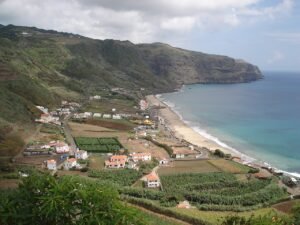
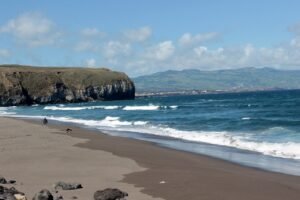
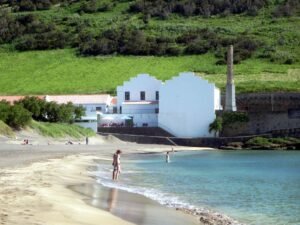
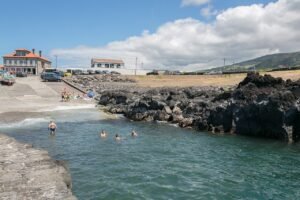
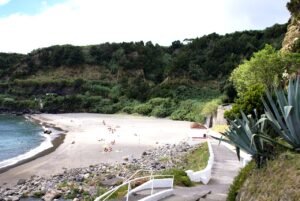
Tap any photo to see the place on the interactive map, with directions from where you are.
Island by island
Azores beaches compared
| Island | Beaches | Best for | Top spots |
|---|---|---|---|
| São Miguel | Black sand on all coasts, plus pools and hot springs | Choice, surf, families | Santa Bárbara, Água d’Alto, Mosteiros |
| Santa Maria | Golden sand in sheltered bays | Classic beach days, sunshine | Praia Formosa, São Lourenço |
| Terceira | A long town beach and lava pools | Natural pools | Biscoitos, Praia da Vitória |
| Faial | Sandy bays near Horta, pools in the west | A town beach with a view | Porto Pim, Almoxarife, Varadouro |
| Pico | Almost no sand; dozens of lava pools | Pool swimming with a mountain view | São Roque, Cachorro |
| São Jorge | Rock pools in the fajãs | Wild, quiet swims; surf at Santo Cristo | Fajã do Ouvidor |
| Flores | Pebbles and pools below the cliffs | Swimming with waterfalls behind you | Fajã Grande |
| Graciosa | A small sandy beach and sea pools | A quiet dip after the thermal spa | Praia, Carapacho |
| Corvo | One small beach by the village | A swim between boats | Areia Beach |
The biggest choice
São Miguel beaches
São Miguel has more beaches than any other island, almost all of black volcanic sand. The south coast is calmer and sunnier; the north coast has bigger waves and the best surf.
- Areal de Santa Bárbara: a long north-coast beach near Ribeira Grande, the island’s surf centre, with lifeguards in summer.
- Água d’Alto Beach: one of the best beaches on the sheltered south coast, near Vila Franca do Campo.
- Mosteiros Beach: black sand facing a row of sea stacks on the west coast, famous for sunsets.
- Fogo Beach (Ribeira Quente): a south-coast beach where hot springs warm the sea.
Every beach, pool and swimming spot on the island, with facilities and surf conditions: São Miguel beaches guide →
Golden sand
Santa Maria beaches
Santa Maria is the oldest and sunniest island, and the only one with real golden sand.
- Praia Formosa: a long, sheltered bay of golden sand with a beach bar and lifeguards in summer; home of the Maré de Agosto festival.
- São Lourenço Bay: a sandy beach below vineyard terraces, one of the most beautiful settings in the Azores.
Pools and a long beach
Terceira beaches
- Biscoitos Natural Pools: the island’s best swimming spot, pools in black lava with ladders into the sea.
- Praia da Vitória: the longest sandy beach on the island, in front of the town.
- Porto Martins Ocean Pools and Prainha in Angra are good for a quick swim.
Beaches with a view
Faial beaches
- Porto Pim Beach: a sheltered sandy bay right in Horta, below Monte da Guia.
- Almoxarife Beach: black sand with a perfect view of Mount Pico.
- Varadouro Natural Pools: lava pools on the west coast, near Capelinhos.
Lava pools
Pico swimming spots
Pico has almost no sandy beaches, but nearly every coastal village has a natural pool in the black lava, often with steps, ladders and a view of the mountain.
- Poças de São Roque: large pools on the north coast, with sunbathing terraces.
- Arcos Natural Pool: on the wild west coast near the Cachorro lava arches.
Small and wild
Swimming on the other islands
- São Jorge: the deep natural pool of Poça de Simão Dias at Fajã do Ouvidor; surf at Fajã da Caldeira de Santo Cristo.
- Flores: Fajã Grande Natural Pools, with waterfalls on the cliffs behind.
- Graciosa: the small sandy beach at Praia and the sea pools below the Carapacho spa.
- Corvo: Areia Beach, next to the village and airstrip.
The Azores speciality
Natural swimming pools
Where lava flows reached the sea, they left basins and channels in the rock. Many villages have turned them into bathing areas, with concrete steps, ladders, ropes and sometimes lifeguards, changing rooms and a café in summer. The sea flows in at every tide, so the water is clean and as warm as the ocean.
- Calm water: pools are sheltered from the waves, which makes them easier for children than open beaches, but check the conditions on rough days.
- Bring water shoes: the rock is sharp and can be slippery.
- Best islands for pools: Pico, Terceira (Biscoitos) and Faial.
Want warm water? The Azores also have hot springs, including one that flows straight into the sea at Ponta da Ferraria.
Swim safely
When and where it is safe to swim
- Season: lifeguards work at the main beaches in summer, usually from June to September. Outside the season, and at unguarded spots, swim with extra care.
- Flags: green means safe, yellow means paddle but don’t swim, red means don’t go in.
- Currents: the north coasts have strong waves and rip currents; choose the sheltered south coasts or pools on rough days.
- Portuguese man o’ war: these blue jellyfish-like creatures sometimes wash up in summer. Don’t touch them, even on the sand.
- Sea temperature: about 20–23 °C from July to October, cooler in early summer. See the Azores weather guide for month-by-month figures.
Questions
Azores beaches: FAQ
Does the Azores have good beaches?
Yes, but they are different from typical sun destinations: mostly black volcanic sand, plus spectacular natural lava pools. For golden sand, go to Santa Maria.
Which Azores island has the best beaches?
Santa Maria for golden sand and sunshine, São Miguel for the widest choice of beaches, and Terceira and Pico for natural lava pools.
Are there sandy beaches in the Azores?
Yes. Santa Maria has golden sand, and São Miguel, Terceira and Faial have several black-sand beaches.
When can you swim in the Azores?
From about June to October, when the sea is around 20–23 °C and the main beaches have lifeguards.
Is it safe to swim in the Azores?
Yes, at lifeguarded beaches and sheltered pools in calm conditions. Watch out for strong currents on the north coasts and follow the beach flags.
Can you surf in the Azores?
Yes. São Miguel’s north coast, especially Santa Bárbara near Ribeira Grande, is the main surf area, and Fajã da Caldeira de Santo Cristo on São Jorge is famous among experienced surfers.