🗺 Open the interactive Faial map
Faial is the Blue Island, named for the hydrangea hedges that line its roads in summer. Horta, its harbour town, has welcomed Atlantic sailors for centuries, and yachts from around the world still stop at its marina and leave painted logos on the harbour walls. Inland, a vast green crater fills the centre of the island, and at its western tip the Capelinhos volcano added new land in 1957–58. This guide covers the whole island: the regions, the best things to do, how many days you need, getting there and around, where to stay and when to go.
- Size
- 173 km², about 21 km long and 14 km wide
- Main town
- Horta
- Airport
- Horta (HOR), 15 minutes from town
- Time needed
- 2–3 days, plus a day on Pico
- Best time
- June to September; hydrangeas in June–July
- Getting around
- Hire a car; buses and taxis from Horta
- Highest point
- Cabeço Gordo, 1,043 m
- Nickname
- The Blue Island
Start here
The must-see places on Faial
Build your first days around these. Tap any photo to see the place on the interactive map, with directions from where you are.
 Horta🏘 Towns & villages
 Capelinhos Volcano🌋 Volcanoes & peaks
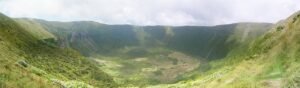 Cabeço Gordo🌋 Volcanoes & peaks
 Caldeira🌋 Volcanoes & peaks
 Monte da Guia🌋 Volcanoes & peaks
 Caldeira Viewpoint👁 Viewpoints
 Varadouro Natural Pools🏊 Natural pools
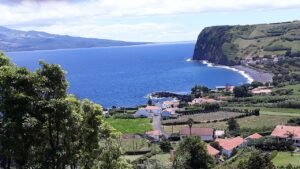 Almoxarife Beach🏖 Beaches
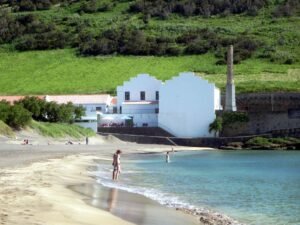 Porto Pim Beach🏖 Beaches
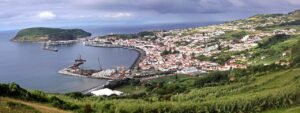 Ponta da Espalamaca★ Sights
Island layout
Faial region by region
Faial is roughly round, with the Caldeira in the middle and a road around the coast. Horta sits on the east side, facing Pico, and everything else is a short drive away. Driving times below are from Horta.

Horta and Monte da Guia
📍 The harbour town · base for most visitors
Walk the marina wall to see the sailors’ paintings, then stop at Peter Café Sport, a sailors’ bar since 1918. South of town, the volcanic headland of Monte da Guia shelters the sandy bay of Porto Pim, the best beach on the island. For the classic view over Horta with Pico behind, drive up to Ponta da Espalamaca.

The Caldeira and the centre
🚗 25 minutes
A road climbs through hydrangeas to the Caldeira Viewpoint, where a short tunnel opens onto a crater about 2 km wide and 400 m deep, filled with forest. On a clear day, walk the rim trail of about 7 km around it, passing Cabeço Gordo, the island’s highest point. On the way up, the Faial Botanical Garden shows the native plants of the Azores.
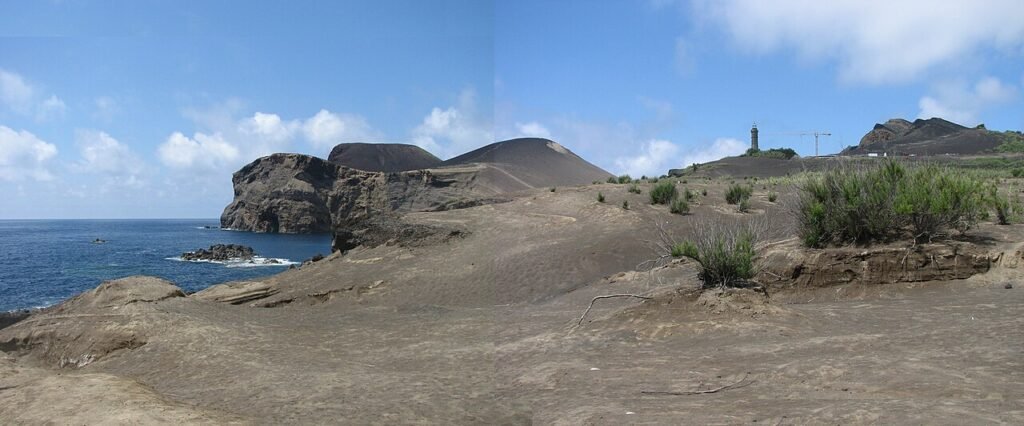
Capelinhos and the west
🚗 30 minutes
In 1957 an undersea eruption began off the west coast and, over 13 months, built new land around the old lighthouse. Today the Capelinhos Volcano is a bare landscape of ash and cinder, and the excellent interpretation centre, built underground, explains how volcanoes shape the islands. Nearby, the Varadouro Natural Pools are a fine place to swim.
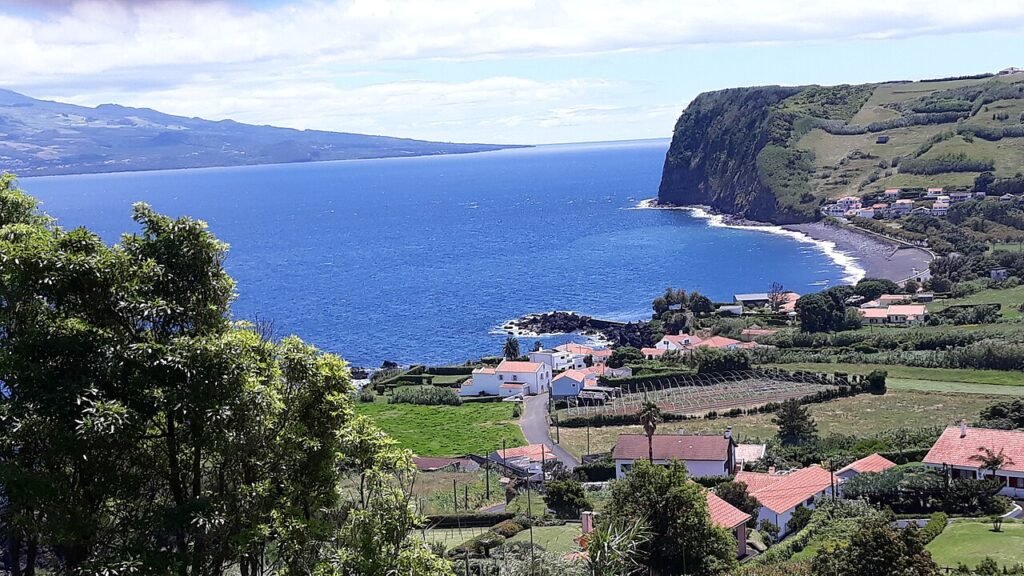
The east and north coasts
🚗 10–25 minutes
North of Horta, Almoxarife Beach has black sand and a perfect view of Mount Pico across the channel. The north coast is greener and quieter, with villages such as Cedros and Praia do Norte, and wide sea views from the cliff-top viewpoints.
The highlights
Best things to do on Faial
⛵ Soak up Horta’s marina
Paintings left by crews from around the world, yachts mid-Atlantic and drinks at Peter Café Sport.
🌋 Walk across Capelinhos
See the youngest land in the Azores and visit the underground volcano centre.
🏞 Look into the Caldeira
The giant crater in the centre of the island, best on a clear morning.
🐋 Go whale watching
Boats leave Horta for the channel between Faial and Pico.
🏖 Swim at Porto Pim
A sheltered sandy bay right in town, with the old whaling station at one end.
💙 See the hydrangeas
From June into August, blue hedges line the roads to the Caldeira and around the island.
⛴ Day trip to Pico
The ferry to Madalena takes 30 minutes: vineyards, wine and the mountain. Pico guide →
🥾 Hike a trail
The Caldeira rim, the Levada trail and the long Ten Volcanoes route.
Planning
How many days do you need on Faial?
Two to three days is enough for Faial itself. Add at least a day for Pico, just across the channel.
| Trip length | What you can see |
|---|---|
| 1 day | Horta, the Caldeira and Capelinhos: a full but rewarding loop. |
| 2–3 days | An easier pace, plus whale watching, the Caldeira rim walk and a beach day. |
| 4–5 days | Faial plus Pico, or the full “triangle” with São Jorge. |
A 2-day plan
- Horta and the Caldeira: the marina and Peter Café Sport, Espalamaca, then the Caldeira on the first clear moment and a swim at Porto Pim.
- The west and north: Capelinhos and its interpretation centre, Varadouro pools, then back along the north coast.
Combining islands? Faial, Pico and São Jorge form the “triangle”, linked by ferries; see which Azores island to visit.
Arrival
Getting to Faial
- By air: Horta airport (HOR) has direct flights from Lisbon and inter-island flights from Ponta Delgada and Terceira. It is about 15 minutes by car from the centre.
- By ferry from Pico: about 30 minutes from Madalena to Horta, several times a day all year.
- By ferry from São Jorge: boats link Velas with Horta, more often in summer.
- By yacht: Horta is one of the most famous stops for sailors crossing the Atlantic.
On the island
Getting around Faial
A hire car for a day or two is the easiest way to see the Caldeira and Capelinhos. Horta itself is best on foot.
| From Horta to | By car |
|---|---|
| Almoxarife Beach | about 10 min |
| Horta airport | about 15 min |
| Caldeira Viewpoint | about 25 min |
| Capelinhos | about 30 min |
Buses link Horta with the villages, though not often, and taxis offer island tours at fixed prices.
Your base
Where to stay on Faial
Horta is the obvious base: restaurants, the marina, the ferry to Pico and buses all start here.
| Area | Best for | Keep in mind |
|---|---|---|
| Horta | Restaurants, the marina, the Pico ferry, no car needed in town | Busy in summer when the yachts arrive |
| Almoxarife and the east coast | Beach stays with a view of Pico | A short drive into town |
| The west and Varadouro | Quiet rural houses near Capelinhos and the pools | Few restaurants; you will need a car |
Weather
When to visit Faial
| Season | Typical daytime | What to expect |
|---|---|---|
| Summer (June–September) | 23–26 °C | Hydrangeas in bloom, warm sea and the Semana do Mar sailing festival in August. The busiest time. |
| Spring (April–May) | 18–21 °C | Fresh green island, migrating whales and yachts arriving from the Caribbean. |
| Autumn (October–November) | 19–22 °C | Mild and quieter, with more showers. |
| Winter (December–March) | 15–17 °C | Wet, windy and very quiet; the Caldeira is often in cloud. |
Know before you go
Tips for visiting Faial
- Go to the Caldeira when it is clear. The crater fills with cloud easily, so drive up at the first sunny moment.
- Allow time for the Capelinhos centre: give it at least 1.5 hours.
- Take the early ferry to Pico for a day trip and check the time of the last boat back.
- Look for your country’s flag among the paintings on the marina walls.
- Pack layers: the Caldeira rim is windy and much cooler than Horta.
Use our interactive Faial map to find viewpoints, pools, beaches and trailheads near you, with one-tap directions.
Questions
Faial FAQ
Is Faial worth visiting?
Yes, especially combined with Pico. Horta’s marina culture, the giant Caldeira and the Capelinhos volcano are unlike anything on the other islands, and the island is small and easy to explore.
How many days do you need on Faial?
Two to three days for Faial, plus at least one day for Pico across the channel. In a hurry, one full day covers Horta, the Caldeira and Capelinhos.
Faial or Pico?
Visit both: they are 30 minutes apart by ferry. Faial has the livelier town and easier sightseeing, Pico has the mountain, wine and whales. Many travellers stay on one and day-trip to the other.
Do you need a car on Faial?
For a day or two, yes, to reach the Caldeira and Capelinhos easily. Horta is walkable, and taxis offer island tours.
When do the hydrangeas bloom on Faial?
From June to August, at their best in late June and July.
Can you swim on Faial?
Yes. Porto Pim in Horta and Almoxarife are the best beaches, and Varadouro has natural pools. The sea is warmest from July to September.