Nine islands, one holiday: choosing where to go is the first real decision of any Azores trip. There is no wrong answer, since every island is green, volcanic and uncrowded. But each has a clear personality, and matching the island to your kind of trip makes all the difference. Use the picker below, compare the islands side by side, or jump to the island profiles.
The short answer
- First visit, one island: São Miguel. The most to see, the most flights and the easiest base.
- One week: São Miguel + Terceira for culture, or São Miguel + Pico for the mountain and whales.
- Hiking and big landscapes: Flores, São Jorge and Pico.
- Whales and dolphins: Pico and Faial (São Miguel is good too).
- Beaches and sun: Santa Maria.
- Total peace and quiet: Graciosa and Corvo.
Island picker
Find your Azores islands in 10 seconds
Side by side
Compare the 9 islands at a glance
How each island scores for the things travellers care about most, from 1 (not its strength) to 5 (among the best in the Azores).
| Island | Landscapes | Hiking | Beaches & pools | Towns & culture | Food & wine | Whale watching | Hot springs | Peace & quiet | Easy to reach |
|---|---|---|---|---|---|---|---|---|---|
| São Miguel | 5 out of 5 | 4 out of 5 | 3 out of 5 | 4 out of 5 | 5 out of 5 | 5 out of 5 | 5 out of 5 | 2 out of 5 | 5 out of 5 |
| Terceira | 4 out of 5 | 4 out of 5 | 3 out of 5 | 5 out of 5 | 5 out of 5 | 3 out of 5 | 1 out of 5 | 3 out of 5 | 4 out of 5 |
| Pico | 5 out of 5 | 5 out of 5 | 3 out of 5 | 3 out of 5 | 5 out of 5 | 5 out of 5 | 1 out of 5 | 4 out of 5 | 3 out of 5 |
| Faial | 4 out of 5 | 4 out of 5 | 3 out of 5 | 4 out of 5 | 4 out of 5 | 5 out of 5 | 1 out of 5 | 3 out of 5 | 3 out of 5 |
| São Jorge | 5 out of 5 | 5 out of 5 | 2 out of 5 | 2 out of 5 | 4 out of 5 | 3 out of 5 | 1 out of 5 | 4 out of 5 | 2 out of 5 |
| Flores | 5 out of 5 | 5 out of 5 | 2 out of 5 | 1 out of 5 | 2 out of 5 | 2 out of 5 | 1 out of 5 | 5 out of 5 | 1 out of 5 |
| Santa Maria | 3 out of 5 | 3 out of 5 | 5 out of 5 | 2 out of 5 | 3 out of 5 | 3 out of 5 | 1 out of 5 | 4 out of 5 | 3 out of 5 |
| Graciosa | 3 out of 5 | 2 out of 5 | 3 out of 5 | 2 out of 5 | 3 out of 5 | 1 out of 5 | 3 out of 5 | 5 out of 5 | 2 out of 5 |
| Corvo | 4 out of 5 | 3 out of 5 | 1 out of 5 | 1 out of 5 | 1 out of 5 | 1 out of 5 | 1 out of 5 | 5 out of 5 | 1 out of 5 |
Our ratings from 1 to 5, based on what each island offers a visitor. Tap an island to open its map.
Island profiles
The islands, one by one
What each island does best, who should skip it, how long to stay and how to get there. Every island links to its interactive map with the must-see places marked.
Crater lakes, hot springs, tea plantations and the archipelago’s liveliest town.
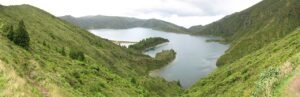
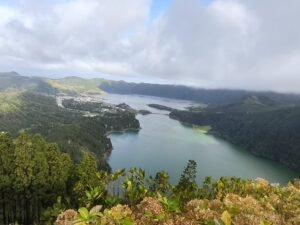
The largest and liveliest island packs the archipelago’s greatest hits into one place: the twin lakes of Sete Cidades, wild Lagoa do Fogo, the hot springs and fumaroles of Furnas, Europe’s only tea plantations and Ponta Delgada, the biggest town. It has the most flights, hotels and restaurants, and the widest choice of tours.
- Best for: first-timers, hot springs, crater lakes, food, whale watching, families.
- Skip if: you want empty roads in August; the famous viewpoints get busy.
- Stay: 4–7 nights. Getting there: direct flights from Lisbon, Porto, several European cities and the US/Canada east coast.

UNESCO-listed Angra, lava caves you can walk into and a festival every weekend.
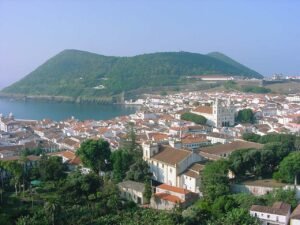
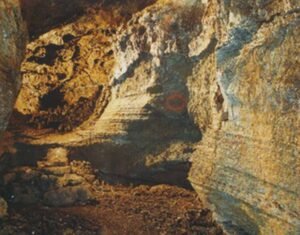
The cultural island. Angra do Heroísmo is a UNESCO World Heritage city with the finest streets and churches in the Azores, and inland you can walk down into Algar do Carvão, a lava tube inside an extinct volcano. From spring to autumn, villages hold Holy Spirit festivals and bullfights on a rope almost every weekend, and the food is some of the best in the islands.
- Best for: history and towns, festivals, food, lava caves, a second island after São Miguel.
- Skip if: you only care about beaches or hot springs.
- Stay: 3–4 nights. Getting there: Lajes airport has flights from Lisbon and some international routes; about 40 minutes from São Miguel.


Portugal’s highest peak, lava-stone vineyards and the best whale watching.
Dominated by Mount Pico, at 2,351 m the highest point in Portugal and a classic sunrise climb. Below it, black lava-stone walls enclose UNESCO-listed vineyards, and the old whaling towns are now the best base in the Azores for seeing sperm whales and dolphins.
- Best for: climbing a volcano, wine, whale watching, lava-rock swimming pools.
- Skip if: you want lively towns and lots of restaurants.
- Stay: 3–4 nights (one day for the mountain). Getting there: Pico airport, or a 30-minute ferry from Horta on Faial.


Hydrangea hedges, the sailors’ marina in Horta and the Capelinhos volcano.
Named for the hydrangea hedges that turn the roads blue in summer. Horta’s marina is a stop for sailors crossing the Atlantic, who paint the harbour walls for luck. At the western tip, the Capelinhos volcano erupted in 1957–58 and left a lunar landscape you can walk across.
- Best for: sailing culture, the Capelinhos volcano, whale watching, combining with Pico.
- Skip if: you are short on time and not visiting Pico too.
- Stay: 2–3 nights. Getting there: Horta airport (flights from Lisbon and São Miguel), or the ferry from Pico.


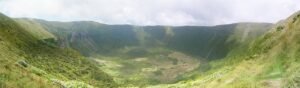


A long blade of cliffs with fajãs at their feet — and the famous cheese.
A long blade of cliffs rising straight from the sea. At their feet lie the fajãs, flat strips of land formed by landslides and lava, some reachable only on foot. Walk down to Fajã da Caldeira de Santo Cristo for its lagoon and clams, and taste the island’s famous São Jorge cheese.
- Best for: serious hiking, cliff scenery, cheese, slow travel.
- Skip if: you have limited mobility; the best places need steep walks.
- Stay: 2–3 nights. Getting there: small airport near Velas, or ferries from Pico and Faial.


Waterfalls everywhere, basalt organ pipes and Europe’s westernmost edge.
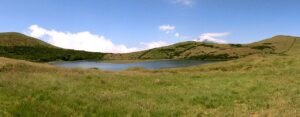
Often called the most beautiful island of all. Waterfalls pour off every cliff, crater lakes sit in the highlands and the basalt columns of Rocha dos Bordões look like organ pipes. It sits on the North American plate and is the westernmost point of Europe.
- Best for: waterfalls, wild hiking, photography, remoteness.
- Skip if: your trip is short; weather can delay flights, so leave a spare day.
- Stay: 3–4 nights. Getting there: inter-island flights only, usually via São Miguel or Terceira.
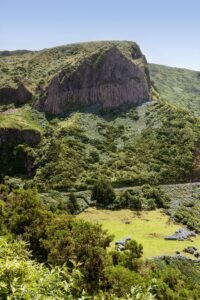
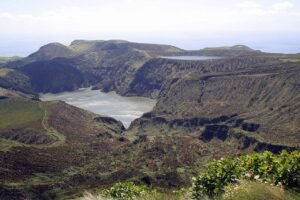
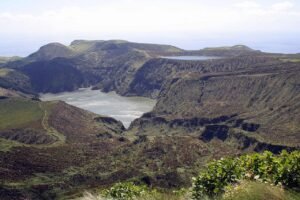
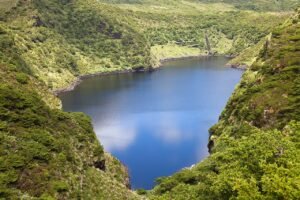

The sunniest island: white-sand bays, vineyards on terraces and a red clay desert.
The oldest, driest and sunniest island, and the only one with real sandy beaches. Terraced vineyards tumble into São Lourenço Bay, and the red clay desert of Barreiro da Faneca looks nothing like the rest of the Azores.
- Best for: beaches, sunshine, diving, a quiet add-on to São Miguel.
- Skip if: you want big volcanic scenery and crater lakes.
- Stay: 2–3 nights. Getting there: a 30-minute flight from São Miguel; some summer flights from Lisbon.
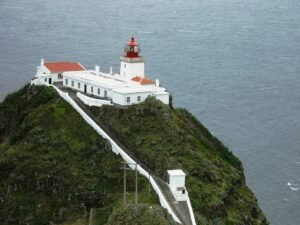
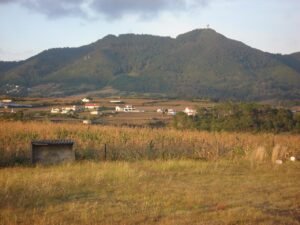

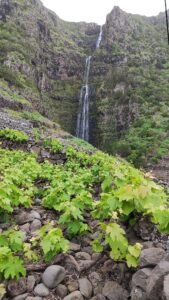
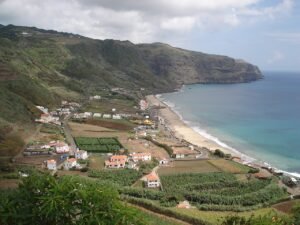
A quiet biosphere reserve with windmills and a lake inside a sulphur cave.
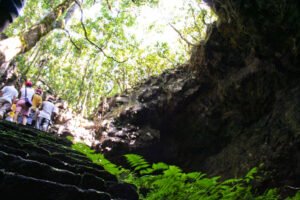
A quiet UNESCO Biosphere Reserve of windmills, low hills and vineyards. Its highlight is Furna do Enxofre: a spiral staircase leads down inside the caldera to a cave with a sulphur lake. Finish the day in the thermal baths at Carapacho.
- Best for: slow days, a thermal spa, an unusual volcano, escaping the crowds.
- Skip if: it is your first and only island.
- Stay: 1–2 nights. Getting there: inter-island flights, mostly via Terceira.

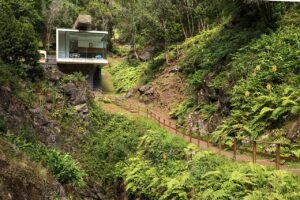
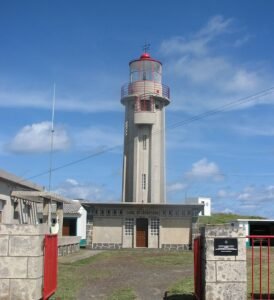
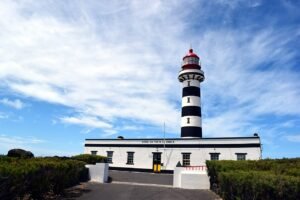

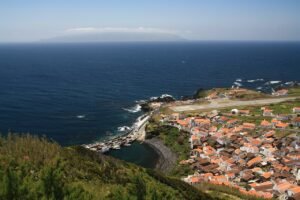
One village, one crater and a few hundred people on the smallest island.
The smallest island: one village, one road and a few hundred residents. The road climbs to the Caldeirão, a huge crater with lakes and islets inside it. Most visitors come on a day trip by boat from Flores; birdwatchers come in autumn for rare American migrants.
- Best for: a day trip from Flores, birdwatching, total remoteness.
- Skip if: you are not already going to Flores.
- Stay: a day trip, or 1 night. Getting there: boat or small plane from Flores.
⭐ Most popular on CorvoAll must-see places on the map →

Itineraries
Island combinations by trip length
Plan at least two nights per island: inter-island flights and ferries depend on the weather, and moving every day leaves little time to enjoy each place.
| Trip length | Route | Why it works |
|---|---|---|
| 4–5 days | São Miguel | One base, no inter-island travel, and enough to see the highlights without rushing. |
| 7 days, first visit | São Miguel 4 + Terceira 3 | Nature and hot springs, then history and food. A 40-minute flight apart. |
| 7 days, mountain and whales | São Miguel 4 + Pico 3 | The classic contrast: lakes and steam, then the volcano, vineyards and whales. Hop to Faial by ferry for a day. |
| 7 days, been before | Faial 2 + Pico 3 + São Jorge 2 | The “triangle”: three islands joined by ferries, with the best hiking and whale watching. |
| 10 days | São Miguel 4 + Pico 3 + Faial 2 | Adds the central islands with ferries between them; day trip to São Jorge if the weather is good. |
| 10 days, nature lovers | São Miguel 4 + Terceira 2 + Flores 3 | From the busiest island to the wildest; Flores rewards a slower pace. |
| 2 weeks | São Miguel 4 + Terceira 3 + Pico 3 + Flores 3 | The best of the archipelago, with a day on Faial from Pico and a boat trip to Corvo from Flores. |
Island hopping
Getting between the islands
- Flights: SATA Air Azores links all nine islands, mostly via São Miguel and Terceira. Flights are short (30–60 minutes) but can be delayed or cancelled by wind and fog, especially to Flores and Corvo.
- Ferries: Atlânticoline runs ferries between Faial, Pico and São Jorge all year, and between Flores and Corvo. Horta to Madalena (Pico) takes about 30 minutes. São Miguel and Terceira are not part of the regular ferry network, so plan to fly.
- Cars: hire a car on every island you stay on; buses run mainly between the main towns.
See how far apart the islands are on our Azores map.
Questions
Frequently asked questions
Which is the best Azores island to visit?
For most travellers, São Miguel: it offers the most variety, the best flight connections and the widest choice of hotels and tours. The best island for you depends on your trip: Pico and Flores for hiking, Terceira for culture, Santa Maria for beaches, Graciosa or Corvo for quiet.
Which Azores island should I visit first?
São Miguel. It has the most direct international flights and lets you see crater lakes, hot springs and whales in one place. Visit the other islands on a second trip or add one for a week-long holiday.
How many Azores islands should I visit in one trip?
One island for 4–5 days, two for a week, three for 10 days and four for two weeks. Allow at least two nights per island so a cancelled flight does not ruin your plans.
São Miguel or Terceira?
São Miguel for nature: lakes, hot springs and more viewpoints. Terceira for culture: Angra do Heroísmo, festivals and food, and it is a little quieter. If you have a week, do both.
Which Azores island is best for families?
São Miguel, thanks to its warm thermal pools, easy short walks, whale watching tours and the widest choice of family-friendly hotels. Santa Maria is a calm second island for beach days.
Which island has the best beaches?
Santa Maria, with Praia Formosa and São Lourenço Bay. Elsewhere, swimming happens mostly in natural lava pools, such as Biscoitos on Terceira or the pools on Pico.
Can you visit the Azores without flying between islands?
Only within the central group and between Flores and Corvo, where ferries run. To combine São Miguel with any other island you need to fly.