🗺 Open the interactive Graciosa map
Graciosa is the quiet one: a small, low island of vineyards, windmills with red domes and stone-walled fields, protected as a UNESCO Biosphere Reserve. Its great sight is underground. Inside the island’s caldera, a stone tower with a spiral staircase leads down into Furna do Enxofre, a vast cave with a lake at the bottom. Finish the day in the thermal baths at Carapacho. This guide covers the whole island: the regions, the best things to do, how many days you need, getting there and around, where to stay and when to go.
- Size
- 61 km², about 12 km long and 7 km wide
- Main town
- Santa Cruz da Graciosa
- Airport
- Graciosa (GRW), next to Santa Cruz
- Time needed
- 1–2 days
- Best time
- May to September
- Getting around
- Hire a car or a taxi for a day
- Highest point
- The Caldeira rim, 402 m
- Nickname
- The White Island
Start here
The must-see places on Graciosa
Tap any photo to see the place on the interactive map, with directions from where you are.

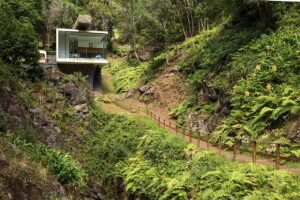
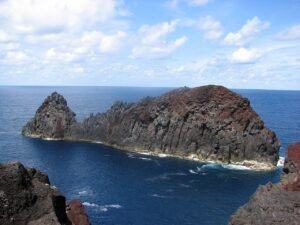
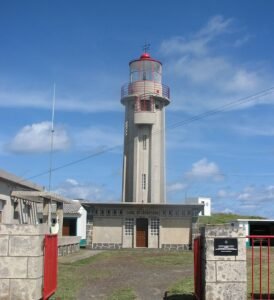
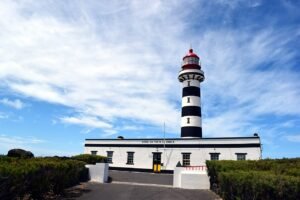
Island layout
Graciosa region by region
Graciosa is small enough to drive around in an afternoon. Santa Cruz is in the north, the Caldeira in the south-east, and nothing is more than 20 minutes away. Driving times below are from Santa Cruz.

Santa Cruz da Graciosa
📍 The main town · base for most visitors
A whitewashed town built around two old ponds, with a pretty church square, the Graciosa Museum and a small harbour. Above it, the chapels on Monte da Ajuda look over the whole island. The west, towards the Ponta da Barca Lighthouse, has cliffs and a rock islet shaped like a whale.

The Caldeira and Furna do Enxofre
🚗 15 minutes
A road tunnel leads into the Caldeira, a forested crater. Inside it, a stone tower with a spiral staircase of more than 180 steps leads down into Furna do Enxofre, one of the largest volcanic caves in the world, with a lake and bubbling mud at the bottom. The rim walk around the crater is about 6 km, and the Furna da Maria Encantada, a natural rock tunnel, frames a view into the crater.

Carapacho and the south
🚗 20 minutes
At the southern tip, the thermal spa of Carapacho has warm mineral pools by the sea, with natural rock pools below it for a swim. The Carapacho Lighthouse stands on the cliffs above.

Praia and the east coast
🚗 10 minutes
The village of Praia has a small sandy beach, a harbour and an islet offshore that is a nesting ground for seabirds. The farmland around it, dotted with windmills and vineyards, is home to the island’s rare breed of dwarf donkey.
The highlights
Best things to do on Graciosa
🕳 Go down into Furna do Enxofre
A spiral staircase into a huge volcanic cave with a lake. Check the opening hours.
♨️ Soak in Carapacho
Warm mineral baths at the thermal spa, then a swim in the sea pools. All Azores hot springs →
🥾 Walk around the Caldeira
About 6 km around the crater rim, with views over the whole island.
🌬 See the windmills
Graciosa’s windmills have pointed red domes, a style found only here.
🍰 Taste queijadas
The island’s famous star-shaped little tarts of milk, eggs and cinnamon, with a glass of local white wine.
🏊 Swim in a rock pool
Natural pools at Carapacho and along the coast.
🗺 Comparing islands? See the best things to do on every Azores island.
🐋 Want to see whales? Compare the islands in our Azores whale watching guide.
🏞 Love the views? See the best crater lakes in the Azores, island by island.
Planning
How many days do you need on Graciosa?
One to two days. One full day covers the main sights; a second lets you slow down, walk the Caldeira and spend an afternoon at Carapacho.
A 1-day plan
- Morning: Furna do Enxofre and the Caldeira, then Furna da Maria Encantada.
- Afternoon: Carapacho thermal baths and the lighthouse, Praia, and Santa Cruz in the evening.
Graciosa combines well with Terceira, a short flight away; see which Azores island to visit.
Arrival and getting around
Getting to and around Graciosa
- By air: inter-island flights, mostly from Terceira (about 30 minutes) and Ponta Delgada. The airport is next to Santa Cruz.
- By ferry: summer ferries sometimes link Graciosa with Terceira and the central islands; check the current schedule.
- On the island: hire a car for a day, or book a taxi tour. Distances are short and roads quiet.
| From Santa Cruz to | By car |
|---|---|
| Praia | about 10 min |
| Furna do Enxofre | about 15 min |
| Carapacho | about 20 min |
✈️ Flying in from abroad? See how to get to the Azores: flights from Europe and North America, and which airport to choose.
Your base
Where to stay on Graciosa
Santa Cruz has the most places to stay and eat. Carapacho suits a thermal break, and rural houses in the countryside offer real quiet.
| Area | Best for | Keep in mind |
|---|---|---|
| Santa Cruz da Graciosa | Restaurants, the airport, walking around town | A small town; evenings are quiet |
| Carapacho | The thermal spa and sea pools | Very few restaurants |
| Countryside | Farm stays among the windmills and vines | You will need a car |
🛏 Visiting more than one island? See where to stay on every Azores island.
Weather
When to visit Graciosa
Graciosa is low and fairly dry for the Azores. Summer (June–September, 23–26 °C) is best for swimming and for reliable flights; spring and autumn are quiet and mild; winter is windy and many places close early.
🌦 More detail: Azores weather month by month, with sea temperatures and how the weather differs between the islands, and the best time to visit the Azores by month and interest.
Know before you go
Tips for visiting Graciosa
- Check Furna do Enxofre’s opening hours: they are limited and change by season.
- Bring a jacket into the cave; it is cool and damp at the bottom.
- Book Carapacho in advance in summer if you want a thermal treatment.
- Buy queijadas in Santa Cruz to take home: they keep for days.
Use our interactive Graciosa map to find viewpoints, pools and trailheads near you, with one-tap directions.
Questions
Graciosa FAQ
Is Graciosa worth visiting?
Yes, for a slow day or two. Furna do Enxofre is one of the most remarkable sights in the Azores, and the island is peaceful, pretty and very uncrowded.
How many days do you need on Graciosa?
One to two days. One full day covers the main sights.
What is Furna do Enxofre?
A huge volcanic cave inside Graciosa’s caldera, reached by a spiral staircase in a stone tower. At the bottom is a lake and an area of bubbling mud and gas.
How do you get to Graciosa?
By inter-island flight, mostly from Terceira or Ponta Delgada. Summer ferries may also run from Terceira.
Why is Graciosa called the White Island?
For the pale rock formations seen by its first settlers, and today for its whitewashed houses and windmills.